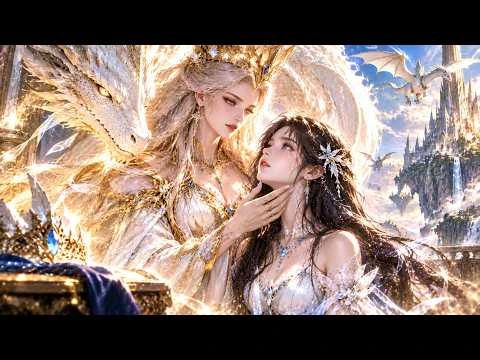
“AM I LOOKING IN A MIRROR?” THE DUKE’S DAUGHTER ASKED—THEN THE DUKE SAW HER LITTLE DOUBLE

“AM I LOOKING IN A MIRROR?” THE DUKE’S DAUGHTER ASKED—THEN THE DUKE SAW HER LITTLE DOUBLE
Lady Rose Hartwell was never supposed to be in the laundry court.
At ten o’clock, she was meant to be in the east drawing room, painting a vase beneath the watchful eye of her governess, Miss Vale, with a tray of watercolors arranged from pale blue to deepest green and a clock that seemed determined to announce every quarter hour of Rose’s life.
Instead, Rose stood before the laundry window, staring.
On the other side of the glass was a girl carrying a bundle of white sheets over her head. Her dark hair had escaped its braid, one elbow of her brown dress was patched, and her shoes were damp from the morning rain.
Rose stepped closer.
The girl stepped closer too.
Rose lifted her chin.
The girl lifted hers.
They had the same narrow nose, the same gray-green eyes, and the same tiny mark beside the left eyebrow.
Rose touched the glass.
“Am I looking in a mirror?”
The girl glanced at the dirty window.
“If you are, it needs cleaning.”
Rose stared at her, then laughed.
That was how Lady Rose Hartwell met Ivy Reed.
Rose was the Duke of Hartwell’s only acknowledged child. Ivy was the daughter of Norah Reed, a laundress who had worked at Hartwell House for only six months. They should have belonged to entirely different worlds.
Yet, when Rose saw Ivy running across the meadow later that week, laughing as they struggled to fly Rose’s damaged blue kite, the resemblance struck Duke Edmund Hartwell so violently that his hand tightened around the stone terrace railing.
He had seen the girl before.
He had simply never allowed himself to truly look.
That evening, Edmund opened a locked drawer he had not touched in years.
Inside lay six unsent letters, all written when he was nineteen.
All were addressed to Norah Reed.
And beneath them was the one letter he had never received—the letter that had told him, ten years earlier, that Norah was carrying his child.
Edmund stared at the handwriting until the room seemed to lose its air.
Ivy Reed was not merely a servant’s daughter.
She might be his daughter.
And suddenly the girl who looked like Rose was no longer a curious reflection in a laundry window.
She was the missing piece of a family secret Edmund had spent ten years believing did not exist.
What happened to the letter that could have changed everything—and what would Edmund do when he finally learned the truth?
#HistoricalRomance #RegencyRomance #DukeStory #FamilySecrets #EmotionalStory #UnexpectedSisters #ViralStory
PART 2 — THE LITTLE GIRL WHO REFUSED TO BECOME THE DUKE’S PLAN
Edmund did not rush to claim Ivy.
For perhaps the first time in his life, he understood that certainty was not the same as authority.
Norah met him in a small room beside the servants’ hall, not in his grand study. She told him the truth plainly: she had written to him when she discovered she was pregnant, but the letter had never reached him. When no answer came, she had raised Ivy alone.
She had never told the child that her father was dead.
She had simply said, “He was a man who did not know how to stay.”
Edmund accepted the words because they were deserved.
His first instinct was to make arrangements. A nursery. A tutor. New clothes. A legal acknowledgment. A place for Ivy in the West Wing.
Norah stopped him.
“Ivy is not a parcel,” she said. “You cannot sign for her and carry her upstairs.”
The sentence stayed with him.
Meanwhile, Rose and Ivy continued repairing their kite. Rose knew colors and elegant designs; Ivy knew wind, wood, cloth, and the quiet language of things about to break.
When a storm threatened the Midsummer Kite Day, Edmund cancelled the event.
The girls disagreed.
They discovered that the sheltered orchard could work if the old stone wall were repaired, then spent two muddy days measuring the land and helping the village carpenter restore the broken section.
Edmund watched them and realized something uncomfortable: every time he tried to protect the girls by deciding everything for them, he made their world smaller.
So, on the morning of the kite festival, when Ivy and Rose’s handmade kite broke in front of the entire village, Edmund did not summon a servant to make the embarrassment disappear.
He knelt in the wet grass.
“What do you need?” he asked.
“Paper,” Ivy replied, “and someone to hold the frame.”
The Duke of Hartwell held the broken kite while Rose cut the paper, Ivy repaired the spar, and Norah stitched the torn fabric.
When the kite finally rose again, it was crooked, patched, and imperfect.
It was also beautiful.
And as Rose placed the brass compass prize into Ivy’s hand, Edmund understood that the family he had spent years trying to control might only become a family if he learned to listen.
But one question remained.
If you were Ivy, would you accept a Duke as your father after ten years of growing up without him—or would you make him prove that he truly wanted a daughter, not simply a problem to fix? Share your thoughts in the comments.
PART 3 — THE GIRL WHO WAS NEVER A MIRROR
The truth was finally spoken after the kite festival, in the same little room beside the servants’ hall where Edmund and Norah had first confronted the past.
There was no grand ballroom, no gathering of noble families, and no dramatic announcement before the village.
Only four people sat around a plain wooden table: Edmund, Norah, Rose, and Ivy.
The cracked blue cup still rested on the shelf.
Edmund looked at Ivy and decided that, if he was going to become her father, the first thing he owed her was honesty.
“I believe I am your father,” he said.
Ivy’s fingers tightened around the brass compass.
Edmund told her about the summer he had spent with Norah when they were young, the letters they had exchanged, the sudden death of his elder brother, and the journey that had taken him away from Hartwell. He told her about the letter that had never reached him and the six letters he had written afterward, believing Norah had chosen not to answer.
He did not call it fate.
He did not call it a tragic misunderstanding.
He named the mistakes exactly as they had happened.
A letter misplaced.
A family decision made without explanation.
Two young people too proud and frightened to ask the same question twice.
And a child who had grown up because no one had known how badly the adults had failed.
Ivy listened without interrupting.
When Edmund finished, she asked the question he had feared most.
“Do you want me to move into Hartwell House?”
Edmund looked at her for a long moment.
“I want to know you,” he said. “I do not want to take away the life you already have.”
Norah remained silent.
The decision belonged to Ivy.
“I want to stay with Mum,” Ivy said. “I want to come to the workshop on Saturdays. And I want Rose to visit us sometimes, but not when she is wearing shoes that cannot get dirty.”
Rose immediately looked down at her boots.
“They were expensive,” she said.
“That is exactly why you should not ruin them.”
Rose considered this.
Then she smiled.
Edmund agreed to every condition.
He also asked whether Ivy wanted him to acknowledge her publicly.
“Not yet,” she said.
“When, then?”
“When Mum and I are ready.”
Edmund nodded.
The answer was difficult, but he accepted it.
For once, he did not try to make uncertainty disappear.
The weeks that followed were not magically easy.
Rose and Ivy still argued.
Rose complained that Ivy left tools everywhere. Ivy complained that Rose changed dresses three times before lunch. Rose once sent a servant to carry a box of materials to the workshop, and Ivy sent it straight back because she had never asked for them.
They argued for twenty minutes.
Then Rose carried the box herself.
“I should have asked,” she admitted.
Ivy looked at her.
“I should have explained instead of sending it back.”
That was how the two girls learned to become sisters—not through a formal declaration, but through small corrections, shared work, arguments, apologies, and the gradual discovery that neither needed to become like the other.
Rose learned that money could buy materials but could not purchase another person’s time.
Ivy learned that accepting kindness did not always mean surrendering independence.
Norah remained at Hartwell House, but Edmund changed her position at her request, giving her the title and wages of senior household seamstress rather than treating her as someone who needed rescuing.
She wanted fixed hours.
She wanted her wages written clearly.
She wanted no favors disguised as employment.
Edmund agreed.
And once a week, he visited the servants’ hall, not to inspect it, but to ask whether the arrangements were working.
Sometimes Norah said yes.
Sometimes she handed him a list of things that were not.
He listened to both.
By autumn, Norah and Ivy agreed that Edmund could formally acknowledge Ivy as his daughter.
Even then, Ivy chose to keep the surname Reed.
“It belongs to Mum,” she explained.
Edmund did not object.
Rose remained Hartwell.
The two names eventually appeared together on the door of the workshop:
HARTWELL WORKSHOP — OPEN SATURDAYS. BRING WHAT NEEDS MENDING.
Rose painted the first line.
Ivy painted the second.
Edmund held the board steady.
He did not offer a suggestion until they asked.
Months later, a spring storm swept across the estate and tore the old kite from the workshop rafters.
It landed against the same laundry window where Rose and Ivy had first seen each other.
Rose found it before breakfast.
The blue paper had faded. The brown tail had been repaired twice. One antler leaned farther than the other, and the once-proud stag looked slightly ridiculous.
Rose held it against the glass.
Ivy came through the laundry door carrying two cups of tea.
For a moment, their reflections appeared together.
One wore a clean yellow sweater.
The other wore a brown work dress with a fresh patch at the elbow.
Their hair was tied differently.
Their hands showed different kinds of work.
Yet their faces were still remarkably alike.
Rose tilted her head.
“Am I looking in a mirror?”
Ivy studied the cloudy glass.
“No. Mirrors do not argue about knots.”
Rose laughed.
Behind them, Edmund arrived carrying a box of willow strips.
He stopped in the doorway.
The first time he had seen the girls together, he had believed their resemblance was a demand from the past, something that required an immediate answer, a legal arrangement, and a perfect plan.
Now he understood it differently.
Two girls had found each other by accident.
One had taught the other that something could be useful without being polished.
The other had taught her that beauty and opportunity were not wrong when they were shared.
They had not become copies.
They had become more completely themselves.
Edmund placed the box on the workbench.
“What is the plan?” he asked.
Rose and Ivy exchanged a glance.
“There is no plan,” Rose said.
Ivy handed him a strip of blue cloth.
“There is a kite.”
Edmund took the cloth.
Outside, the spring wind moved over the orchard wall. The repaired gate stood open. The workshop door remained unlocked.
On the bench waited a brass compass, a spool of string, and a battered kite with one crooked antler.
The girls carried it into the meadow together.
This time, Edmund did not walk ahead to choose the safest place.
He walked behind them, carrying the spare paper, the extra string, and the willow strips, while Rose and Ivy argued cheerfully about which direction the wind was coming from.
And as the kite rose above the orchard, crooked and patched but stubbornly alive, Edmund finally understood what his daughter had asked that first morning.
Rose had never been looking into a mirror.
She had been looking at someone who belonged beside her.
Not because they had the same eyes.
Not because they shared the same father.
Not because a title could make them sisters.
They belonged beside each other because, when one fell, the other reached for the broken pieces—and neither of them expected the other to become someone else before offering a hand.
The wind pulled the kite higher.
Rose laughed.
Ivy shouted something about the string.
Edmund smiled and followed them across the meadow, no longer trying to decide where the story should go.
For once, he was content to let the people he loved discover it together.
(Descargo de responsabilidad: Este contenido puede haber sido generado por IA con fines de entretenimiento. Cualquier parecido con personas, eventos o lugares reales es pura coincidencia.)